





Dodge Truck Trim Levels: 2026 RAM 1500 Compared
A truck badge can hide a substantial price difference: Kelley Blue Book lists the 2025 Ram 1500 Quad Cab MSRP range at $42,370 to $50,880, even before you compare the broader lineup. If you’re shopping Dodge truck trim levels, the useful question isn’t which badge sits higher. It’s which equipment package, engine and body configuration fits your work, passengers and budget.
For buyers around Amityville and Long Island’s South Shore, that means balancing weekday driving with driveway space, cargo needs and weekend towing. A nicer cabin can be worth paying for, but it doesn’t automatically make the truck a stronger hauler.
Table of Contents
- RAM 1500 Trim Levels and Starting Prices
- Fuel Efficiency by Engine and Drivetrain
- Towing and Payload Ratings by Engine
- Confirm a RAM 1500 Configuration for Your Load
- Which RAM 1500 Trim Fits Everyday Driving on Long Island
- Dodge and Jeep Alternatives to a RAM 1500
- Choosing Your RAM 1500 Trim Before You Buy
RAM 1500 Trim Levels and Starting Prices
A trim name bundles equipment and styling, not a guaranteed capability rating. Engine, cab, bed, drivetrain and towing equipment determine what the finished truck can do.
The modern naming framework took shape with the second-generation Ram, produced from 1993 through 2002, when the 1500, 2500 and 3500 designations broadly identified half-ton, three-quarter-ton and one-ton classes, according to Motor-Car’s second-generation Ram history.
Compare the lineup by purpose
For the new 2026 lineup, MotorTrend lists approximate starting prices before destination of $44,620 for Tradesman, $50,075 for a Big Horn 4×2 Quad Cab with a 6-foot-4-inch bed, $59,365 for a Lone Star 4×4 Crew Cab, and $91,395 for Tungsten. Those price points anchor the comparison below; entries without a published amount require an exact vehicle quote.
2026 RAM 1500 trims by role and starting price
| Trim | Role | Starting price (before destination) | Best fit |
|---|---|---|---|
| Tradesman | Entry work truck | Approximately $44,620 | Lowest-cost starting point for job sites and fleets |
| Express | New value-oriented entry trim | Request an Express configuration quote | Budget shoppers wanting a newer look |
| Warlock | Appearance-focused trim | Request a Warlock configuration quote | Buyers wanting a bolder style |
| Big Horn | Mainstream trim | Approximately $50,075, 4×2 Quad Cab, 6-foot-4-inch bed | Everyday driving with added equipment |
| Lone Star | Regional mainstream configuration | Approximately $59,365, 4×4 Crew Cab | Everyday driving and four-wheel-drive traction |
| Laramie | Upscale trim | Request a Laramie configuration quote | Comfort-focused daily use |
| Rebel | Off-road trim | Request a Rebel configuration quote | Trail and rough-terrain use |
| RHO | Performance trim | Request an RHO configuration quote | Buyers prioritizing output and sporty driving |
| Limited | Luxury trim | Request a Limited configuration quote | Premium comfort and features |
| Limited Longhorn | Upper luxury trim | Request a Limited Longhorn configuration quote | Luxury buyers wanting added appointments |
| Tungsten | Top luxury trim | Approximately $91,395 | Maximum equipment and luxury |
What the extra money buys
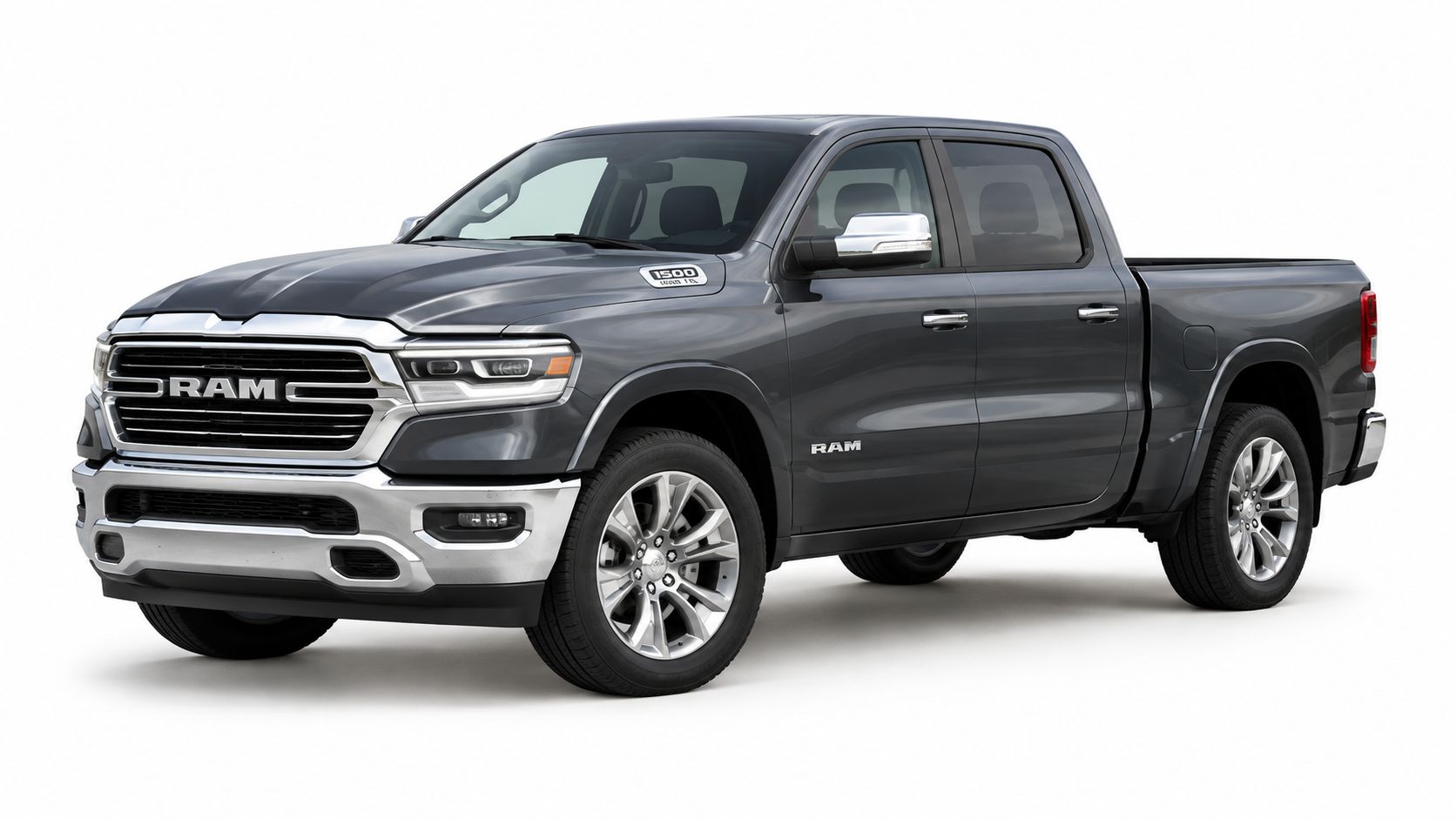
Tradesman is the logical baseline when you need a working bed and a manageable purchase price. Big Horn moves toward everyday convenience, while Lone Star is a regional mainstream configuration shoppers may encounter alongside it. Compare their window stickers rather than assuming the name alone identifies a meaningful equipment difference.
Ram’s model-year FAQ identifies Express and Black Express as new for 2026. They deserve attention from value-conscious shoppers who care about appearance but don’t need a luxury interior.
Laramie moves the conversation toward cabin comfort. Limited, Limited Longhorn and Tungsten put greater emphasis on luxury, while Rebel and RHO address specialized driving priorities rather than just climbing a comfort ladder.
A Big Horn Crew Cab with four-wheel drive costs more than the entry configuration because you’re changing the truck itself, not merely adding trim. Across the published endpoints, the purchase-price spread exceeds forty-six thousand dollars, so deciding on the body and drivetrain first prevents misleading comparisons.
Buying rule: Compare matching cab, bed, engine and drivetrain configurations before deciding whether the next trim is worth its premium.
Use the prior-year Quad Cab range only as historical context, not as a current offer. For a new purchase, request an itemized quote showing the vehicle price, destination, installed equipment, taxes and fees separately.
Fuel Efficiency by Engine and Drivetrain
2026 RAM 1500 fuel economy by engine and drivetrain
Edmunds lists the rear-wheel-drive eTorque V6 at an EPA-estimated 22 mpg combined, 20 city and 25 highway, with the other configurations below at approximately 20, 17 and 15 mpg combined.
| Engine | Drivetrain | Combined mpg |
|---|---|---|
| 3.6-liter Pentastar V6 with eTorque | Rear-wheel drive | 22, with 20 city and 25 highway |
| Standard-output 3.0-liter Hurricane inline-six | Four-wheel drive | About 20 |
| High-output 3.0-liter Hurricane inline-six | Four-wheel drive | About 17 |
| High-output Hurricane in RHO performance model | RHO configuration | About 15 |
The V6 is the efficiency benchmark if you don’t need substantial trailer capacity or specialized performance. More output can make towing feel less demanding, but for an unloaded commute, it may mean paying for capability you rarely use. V8 fuel economy depends on drivetrain and axle choices, so compare the EPA label on the specific truck you’re considering.
Turn mpg into an ownership budget
At 15,000 miles a year, the V6 and high-output four-wheel-drive ratings work out to about 682 versus 882 gallons. That is roughly 200 gallons more; at $3.50 per gallon, the difference is approximately $700 annually. This example illustrates the effect of the stated ratings and fuel price, not a forecast of what you’ll spend.
Your results will vary with idling, traffic, acceleration, trailer use and cargo. Use your own annual mileage to compare fuel expenses rather than relying on the monthly payment alone.
Four-wheel drive can help you get moving in Long Island snow and on slippery approaches. It also adds weight and mechanical losses, and doesn’t shorten every stop or replace suitable tires. The added weight can reduce the payload available for passengers and cargo, so assess the trade-off against your routes and typical load.
Choose four-wheel drive when your routes and conditions justify it, not simply because a higher-priced truck seems better suited to your commute.
Check the fuel recommendation for the exact engine before estimating ownership costs. A budget based on regular gasoline may not fit a configuration that calls for premium. Aggressive tires and added accessories can also change real-world consumption.
Towing and Payload Ratings by Engine
The 2026 RAM 1500’s engine ratings show why a trim name is not a capability rating. Ram’s capability specifications list the following engine outputs and manufacturer maximum towing and payload ratings for the 2026 Ram 1500.
2026 RAM 1500 towing and payload by engine
| Engine | Power and torque | Maximum towing | Maximum payload |
|---|---|---|---|
| 3.6-liter Pentastar V6 with eTorque | 305 hp, 269 lb-ft | 8,130 lb | 2,360 lb |
| Standard-output 3.0-liter Hurricane inline-six | 420 hp, 469 lb-ft | 11,610 lb | 1,930 lb |
| High-output 3.0-liter Hurricane inline-six | 540 hp, 521 lb-ft | 10,000 lb | 1,490 lb |
These are configuration-specific manufacturer maxima, not ratings for every truck with the same engine or trim. Maximum towing and maximum payload also may apply to different configurations. Cab, bed, drivetrain, axle ratio and towing equipment affect the available ratings, so use the table to compare engines, not to approve a specific truck for a load.
Pick the engine for the load
For dense materials, payload can matter more than horsepower. A boat owner may put more weight on towing capacity, but passengers, gear and tongue weight still count against the truck’s limits.
The standard-output Hurricane has the highest maximum towing rating in this comparison. The high-output engine makes more power, but its maximum towing and payload figures are lower. Paying for more horsepower does not automatically give you more capacity.
A loaded boat trailer weighing 8,000 lb falls just below the V6’s advertised maximum. That leaves limited room for configuration differences, and the truck’s available towing allowance must account for passengers and equipment. For that load, compare properly equipped standard-output Hurricane configurations rather than choosing by engine output alone.
Don’t overlook the truck’s own limits
Trailer tongue weight uses payload, along with passengers, bed cargo, the hitch and accessories. A trailer can be below the truck’s maximum tow rating while the truck exceeds its payload, axle or gross vehicle weight limit.
For a specific RAM 1500, match the towing specification to its vehicle identification number, cab, drivetrain, axle ratio and towing equipment. Then check payload, gross vehicle weight, axle ratings, hitch limits and the combined rating together. A larger engine cannot compensate for an overloaded rear axle.
Confirm a RAM 1500 Configuration for Your Load
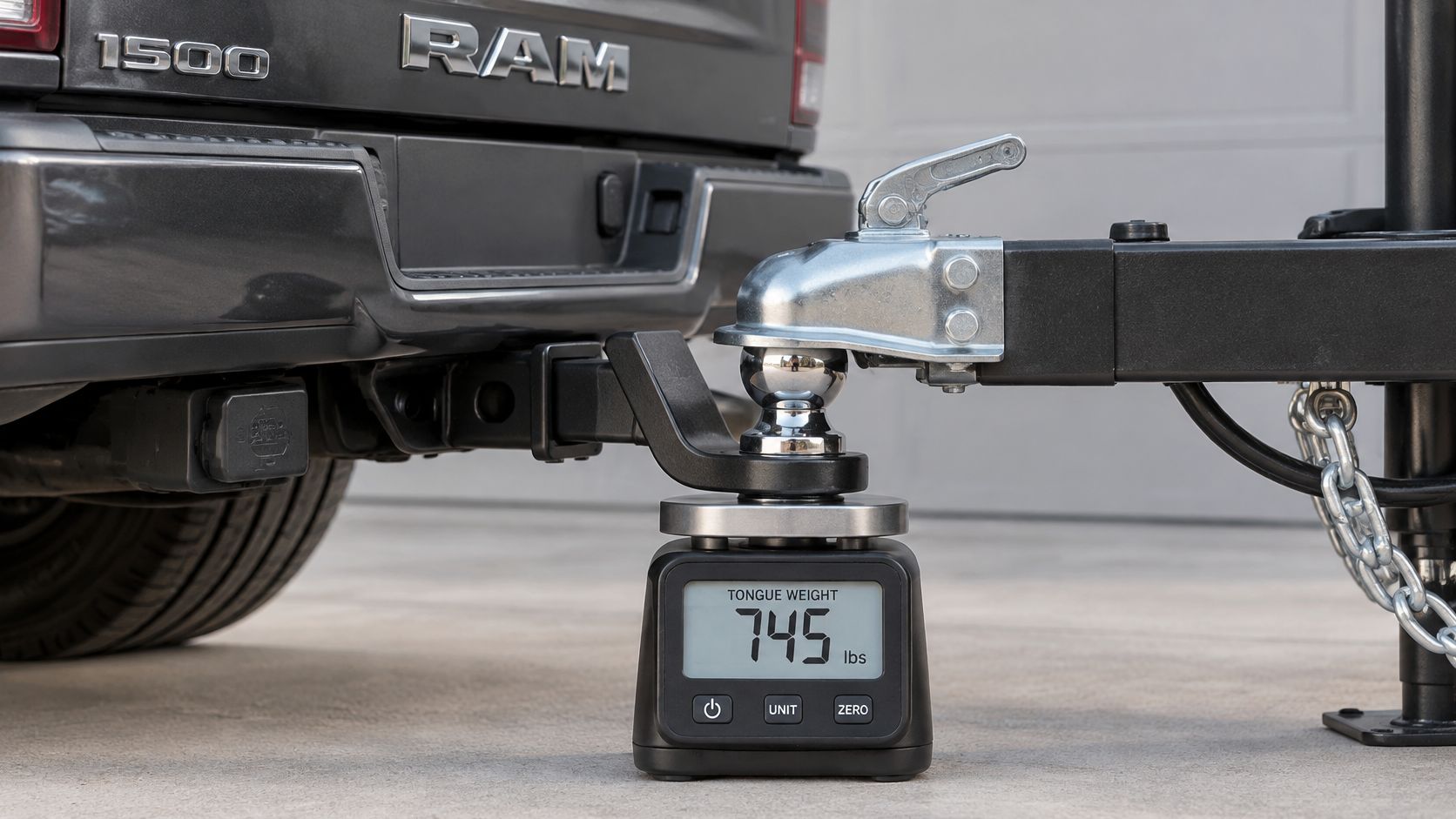
Start with what you’ll carry, not what you hope the truck can handle. A tongue-weight scale, a public vehicle scale and the labels on the actual truck provide a more dependable answer than a trim comparison alone.
Work through the load before signing
- Record loaded trailer weight and tongue weight. Include the boat’s fuel, batteries, anchors and gear, or the equipment normally carried on a utility trailer. For a hypothetical conventional-trailer estimate, you might initially budget tongue weight at 10 to 15 percent of loaded trailer weight, but replace that estimate with measurements and the trailer manufacturer’s requirements.
- Account for everyone and everything. A planning worksheet might temporarily allow 150 lb per passenger, but actual passenger weights are better. Add tools, coolers, hitch equipment and installed accessories. Account for fuel correctly: don’t deduct a full tank twice when the manufacturer’s curb-weight basis already includes it.
- Read the specific truck’s payload label. Find the tire-and-loading information on the driver door jamb. The listed combined occupant-and-cargo allowance is the starting point for that vehicle, not a brochure truck with fewer options.
- Subtract the planned load and leave room. Deduct occupants, cargo, accessories and tongue weight from the label allowance. As a conservative buying preference, I would target at least a 10 percent unused payload margin for the planned trip, while still checking every applicable vehicle and axle limit.
- Confirm the exact tow rating. Use the engine comparison to narrow the shortlist, then obtain the configuration-specific rating. Don’t attach a trailer until the hitch, receiver, tires and combined operating weights also check out.
- Match the bed and cab to the job. Edmunds’ trim guide identifies a 6-foot-4-inch bed with Quad Cab and either a 5-foot-7-inch or 6-foot-4-inch bed with Crew Cab. Measure the tools or cargo you transport, including clearance for a closed tailgate.
- Finalize drivetrain and axle selection before ordering. Decide whether traction or towing needs justify each choice, then rerun the weight check on the resulting vehicle. Don’t calculate around a rear-wheel-drive truck and assume a differently equipped truck has identical allowances.
A heavier luxury trim can leave less usable payload for your job. A Tradesman or Big Horn may be the better work truck even when a premium model carries a more impressive advertised maximum.
Which RAM 1500 Trim Fits Everyday Driving on Long Island
A typical week around Amityville, Lindenhurst, Babylon and Massapequa can include commuting, village parking, landscaping supplies and a boat-ramp visit. Those duties don’t all favor the same configuration, and the most expensive truck can be the least convenient one in a tight driveway.
Plan around your actual routes, too. Check vehicle and trailer restrictions before assuming a parkway is appropriate for a particular truck registration or towing trip.
Work duties versus family duties
Tradesman makes sense for contractors who load tools from the driveway and would rather spend money on useful equipment than decorative upgrades. Price the required towing, storage and convenience options before declaring it the cheapest answer, though. An entry truck loaded with extras may overlap a more suitable mainstream configuration.
Big Horn and Lone Star Crew Cab four-wheel-drive configurations are the practical middle ground for mixed family and truck use. Rear-seat access matters when passengers ride regularly, and the added traction can be useful in winter or on a slippery marina approach.
Laramie and Limited suit buyers who spend more time commuting than filling the bed. Test the seats, visibility, controls and cabin noise on an ordinary road, not just during a short drive around the dealership.
Test parking as seriously as towing
Bring a tape measure and check your driveway, garage opening and usual parking space. Within the Crew Cab choices, the shorter bed is easier to accommodate on village streets, while the longer bed provides more room for materials without opening the tailgate.
- For beach and marina trips: Check where wet equipment will go and whether a bed cover interferes with taller cargo.
- For landscaping loads: Think about unloading access, wheelbarrow clearance and how you’ll secure loose material.
- For commuting: Try backing into a realistic space and checking sightlines around parked cars.
Rebel is a trail-oriented choice, but its specialized character offers limited everyday value if you remain on pavement. Don’t pay for rough-terrain capability solely to negotiate ordinary potholes.
If your household needs another seating row more often than an open bed, compare the Durango before committing to a pickup. Carrying family members comfortably may solve more of your weekly transportation needs than occasionally hauling material without a trailer.
Dodge and Jeep Alternatives to a RAM 1500
Durango is the family alternative when third-row seating matters more than a cargo bed. Compare it with a Big Horn or Lone Star Crew Cab by loading the child seats, bags and sports equipment you use most, then checking how easily everyone gets in.
An enclosed cargo area keeps ordinary luggage separate from weather without requiring a bed cover. A pickup still makes more sense for dirty, bulky or awkward materials, particularly when you don’t want those items inside the passenger compartment.
Choose the body style before the badge
The Grand Cherokee is the comfort-focused Jeep to consider for daily commuting on Sunrise Highway, suitable parkway travel and weekend errands. Test the seating position, rear-seat access and cargo opening rather than assuming an SUV will automatically feel smaller or easier to park.
The Wrangler is the trail-oriented choice for buyers who specifically want Jeep’s open-air character. Compare its highway manners and cargo access with your daily expectations before treating its off-road personality as a free benefit.
- Choose Durango when carrying family members is the main assignment.
- Compare Grand Cherokee when enclosed cargo space and paved-road comfort take priority.
- Consider Wrangler when open-air driving and trail use are central to the purchase.
- Keep RAM 1500 Rebel on the list when similar terrain interests you but an open cargo bed remains necessary.
No towing, payload or mpg figures are stated here for these SUVs because this comparison’s specifications cover the RAM pickup. Request current specifications for the exact SUV trim and powertrain you’re considering.
For a new-vehicle comparison, Security Dodge Chrysler Jeep RAM of Amityville offers a place to evaluate Durango, Grand Cherokee and Wrangler configurations alongside RAM 1500 choices. Compare seating and cargo access in person before deciding which category deserves your budget.
Choosing Your RAM 1500 Trim Before You Buy
If affordability is your first priority, start with Tradesman, then add only the equipment your work requires. A rear-wheel-drive V6 deserves the first look when your routes and loads don’t justify the cost of greater output or added traction.
That isn’t a recommendation to buy the least-equipped truck regardless of use. A missing feature you need every day is more expensive to live with than an optional appearance package you wisely skipped.
Match the shortlist to your priorities
For mixed family driving and occasional towing, Big Horn or Lone Star Crew Cab four-wheel drive is the sensible starting point. Move toward the standard-output Hurricane when your loaded trailer leaves the V6 little operating margin, rather than choosing an engine because its horsepower sounds impressive.
Comfort-focused commuters should compare Laramie and Limited on the same test-drive route. Decide which seat, climate, storage and driver-assistance features you’ll use regularly, and verify them on the window sticker instead of assuming every example includes them.
For other priorities:
- Rebel: Buy it for genuine trail use and rough-terrain needs.
- RHO: Choose it when performance is the purpose, with an operating budget that supports that decision.
- Tungsten: Consider it when top-end luxury is the objective, not as a shortcut to greater work capacity.
- Express and Warlock: Compare their appearance and equipment packages when you want a distinctive look without moving directly into luxury territory.
Bring a buying worksheet
Before visiting, write down:
- Trailer details: Loaded weight, measured tongue weight and hitch requirements.
- People and cargo: Passenger count, usual equipment and accessories you intend to install.
- Parking constraints: Driveway dimensions, garage clearance and preferred bed usability.
- Budget: Comfortable purchase price, down payment and total ownership allowance.
- Efficiency target: Annual mileage, expected towing frequency and acceptable fuel expense.
Bring that worksheet to your new-truck comparison and ask to inspect the door-jamb payload labels on the shortlisted vehicles. Request current itemized pricing and financing terms for each, including the amount financed, interest rate and total repayment, rather than judging affordability by the monthly payment alone.
The right trim is the least expensive package that delivers the comfort and equipment you’ll use, attached to a configuration that safely does the job. Buy the truck that fits your week, not the badge that sits highest on the list.
Security Dodge Chrysler Jeep RAM offers new RAM truck shopping and auto-loan options for buyers comparing work, family and towing configurations. Visit Security Dodge Chrysler Jeep RAM with your load worksheet to compare available RAM 1500 trims, exact vehicle labels and current purchase terms.
0 comment(s) so far on Dodge Truck Trim Levels: 2026 RAM 1500 Compared