





Grand Cherokee vs Cherokee: Long Island Guide
You’re comparing two Jeep SUVs from the driver’s seat, often with the same practical question in mind: will the larger Grand Cherokee make family life easier, or will the smaller Cherokee be less frustrating every day? That question matters on Long Island, where a routine drive can mean tight parking in Massapequa Park, school traffic near Lindenhurst, and a fast merge onto the Southern State Parkway.
The Grand Cherokee vs Cherokee decision isn’t really about which Jeep is “better.” They serve different purposes. The Cherokee has traditionally filled the smaller, more maneuverable SUV role, while the Grand Cherokee grew into Jeep’s larger, more premium family SUV. The right choice depends on whether you’ll use the extra cabin, cargo room, power, and towing capacity often enough to justify the bigger footprint.
| Specification | Jeep Cherokee | Jeep Grand Cherokee |
|---|---|---|
| Overall length | 183 inches | 193.5 inches |
| Width | 73 inches | 78 inches |
| Height | 66 inches | 71 inches |
| Cargo behind second row | 33.6 cubic feet | 37.7 cubic feet |
| Maximum cargo space | 68.3 cubic feet | 70.8 cubic feet |
| Available towing capacity | Up to 3,500 pounds | Up to 6,200 pounds |
| Main powertrain comparison | 1.6-liter engine, 177 hp, CVT | 3.6-liter V6, 293 hp, 8-speed automatic |
Specifications in the table are drawn from Edmunds’ Jeep comparison, Edmunds’ Grand Cherokee specifications, and recent Cherokee and Grand Cherokee cargo comparisons.
Table of Contents
- Choosing the Right Jeep for Long Island Roads
- Dimensions and Cargo Space Compared
- Performance and Fuel Economy Tradeoffs
- Interior Technology and Trim Level Value
- Matching the SUV to Your Local Lifestyle
- Exploring Alternative New Vehicle Options
- Next Steps for Long Island Jeep Buyers
Choosing the Right Jeep for Long Island Roads
A Babylon parent loading groceries, a stroller, and a child’s sports bag will notice the Grand Cherokee’s extra room. A commuter parking on narrow residential streets in Copiague may value the Cherokee’s smaller body every afternoon. Both choices make sense because daily livability matters more than the badge.
The Grand Cherokee has been one of Jeep’s volume anchors for decades. Its first-generation ZJ ran from 1993 to 1998, with close to 1.5 million sales recorded for that generation alone in Hagerty’s Grand Cherokee history. Stellantis later said the nameplate had passed 7 million cumulative sales by its 30th anniversary in 2023, confirming its place as a foundational Jeep family SUV.
That history explains the Grand Cherokee’s position in the lineup. It began as Jeep’s premium SUV and developed into a mainstream choice for families who need more space, power, and towing ability than a compact crossover provides. The Cherokee nameplate has a longer compact-SUV history, with the Cherokee XJ launching in 1984, years before the Wagoneer name returned to define Jeep’s premium large-SUV direction.
The daily-use question matters more than the badge
Long Island buyers should start with their routine. Ask yourself:
- Parking: Do you regularly use compact garages, crowded shopping centers, or tight street spaces?
- Passengers: Are adults often riding in the second row, or is the rear seat mainly for children?
- Cargo: Do you carry bulky gear, or are groceries and backpacks typical?
- Towing: Will you tow a boat, camper, or utility trailer?
- Commute: Do you value a smaller turning footprint more than a quieter, roomier cabin?
The Grand Cherokee’s larger body feels composed on open roads, while its stronger powertrain handles a loaded vehicle with less effort. The Cherokee’s smaller footprint makes it easier to place in a parking space and less demanding on narrow streets.
Practical rule: If you rarely fill the cargo area or tow, don’t buy extra vehicle because the larger model has a higher capability ceiling.
Choose the Grand Cherokee when its added room solves a weekly problem, such as carrying passengers and bulky equipment together. Choose the Cherokee when those needs occur only occasionally and easier parking will improve every commute. For suburban and urban Long Island driving, the larger Jeep earns its upgrade only through regular use of its extra space and capability.
Dimensions and Cargo Space Compared
The Grand Cherokee earns its larger footprint only when it improves daily life. For Long Island families, that means checking garage clearance, passenger room, door swing, and cargo flexibility before paying for a bigger SUV.
According to Edmunds’ published Grand Cherokee specifications, the Grand Cherokee measures 193.5 inches long, uses a 116.7-inch wheelbase, stands 70.8 inches tall, and offers 37.7 cubic feet behind the second row. With the rear seats folded, maximum cargo space reaches 70.8 cubic feet.
The Cherokee measures 183 inches long, 73 inches wide, and 66 inches tall, while the Grand Cherokee measures 193.5 inches long, 78 inches wide, and 71 inches tall, according to Edmunds’ Cherokee and Grand Cherokee guide.
The space differences that matter
| Difference | Cherokee | Grand Cherokee |
|---|---|---|
| Wheelbase | Not specified here | 116.7 inches |
| Cargo behind rear seats | 4.1 cubic feet less | 4.1 cubic feet more |
| Maximum cargo volume | 2.5 cubic feet less | 2.5 cubic feet more |
Autoblog’s comparison of the 2026 models identifies the Grand Cherokee’s 4.1 cubic feet advantage behind the second row and 2.5 cubic feet advantage with the seats folded. Those gains are useful, but they do not transform the Grand Cherokee into a different kind of cargo vehicle.
The practical benefit appears when you load a folded stroller, grocery bags, hockey equipment, or weekend luggage at the same time. The Grand Cherokee leaves more room around those items and gives rear passengers a broader cabin. If your usual load is groceries, backpacks, and a few smaller bags, the Cherokee’s smaller body uses parking space more efficiently.
What the larger body changes
The Grand Cherokee’s 116.7-inch wheelbase should feel more settled on longer highway runs, while its added length and width demand more attention in tight garages, crowded shopping centers, and narrow driveways. Door clearance matters too. Opening a rear door beside another vehicle takes more planning when the Jeep occupies more space.
Check your own property before choosing. Park both models in your garage, bring the child seats your family uses, and load the largest everyday item you carry. Confirm that the liftgate clears the garage, the mirrors leave usable space, and the rear doors open comfortably beside another vehicle. A quick showroom glance cannot answer those questions.
Choose the Cherokee for efficient use of space in tighter surroundings. Choose the Grand Cherokee when its broader cabin and added cargo flexibility solve a weekly problem. For suburban and urban Long Island commuting, the larger Jeep justifies its upgrade through regular livability benefits, not merely a longer specification sheet.
Performance and Fuel Economy Tradeoffs
For a Long Island commute, the Grand Cherokee’s advantage is not just extra muscle. It is the ability to merge onto the Northern State Parkway, carry passengers, and handle a full load without feeling strained. The Cherokee remains the better fit when tight streets, easier parking, and lower day-to-day demands matter more than acceleration or trailer capacity.
The Grand Cherokee’s 2.0-liter turbocharged four-cylinder produces 324 horsepower and 332 lb-ft of torque. Jeep’s published figures include 23 mpg combined and a 529-mile driving range, as reported in Car and Driver’s 2026 Grand Cherokee coverage. Those figures make the turbo version relevant to commuters who want stronger response without choosing the larger vehicle solely for towing.
A loaded parkway merge is where the difference becomes practical. With several passengers, shopping bags, or weekend gear aboard, the turbo engine gives the Grand Cherokee more authority when traffic accelerates quickly. That confidence can matter more in daily driving than a specification-sheet comparison.
Towing is where the Grand Cherokee separates itself
Trailer capacity still gives the Grand Cherokee a clear advantage. Confirm the exact rating for the vehicle’s equipment and configuration through Jeep’s official Grand Cherokee towing specifications before buying. The model name alone does not identify the hitch, drivetrain, or package fitted to a specific vehicle.
That capability matters to Long Island buyers who tow a boat, utility trailer, or recreational equipment. It matters far less to commuters traveling between Amityville, Babylon, and Massapequa Park during a normal week. Paying for a larger SUV and its added capability makes sense only when those needs recur.
Towing advice: If you own a trailer or plan to buy one, verify the exact vehicle’s equipment and rating. Don’t rely on the model name alone.
The Grand Cherokee also has an electrified option. The Grand Cherokee 4xe is listed at 375 horsepower and 56 MPGe in the comparison coverage cited earlier. Consider it only after checking charging access, your daily route, and the selected configuration. Without convenient charging, the advertised efficiency may not translate into an easier routine.
The 2026 Grand Cherokee engine choice
For 2026, Jeep lists a standard 3.6-liter V6 on most trims and an available 2.0-liter turbocharged four-cylinder. The V6 suits buyers who want a familiar configuration. The turbo four is the stronger recommendation for drivers who regularly carry people and gear, especially when highway merging is part of every commute.
Choose the Cherokee if livability means a smaller footprint and simpler urban driving. Choose the Grand Cherokee if stronger response, towing flexibility, and confident loaded-road performance justify its larger footprint for your weekly routine.
Interior Technology and Trim Level Value
The Grand Cherokee’s cabin is the stronger reason to upgrade for drivers who spend substantial time behind the wheel. It presents a more premium environment, with available upscale seating materials, expanded technology, and a quieter feel that can make stop-and-go commuting less tiring.
The Cherokee’s interior is more practical and less intimidating for shoppers who want controls that feel easy to understand. That simplicity can be a benefit. You won’t gain much from premium cabin features if your priority is a manageable monthly payment and straightforward transportation.
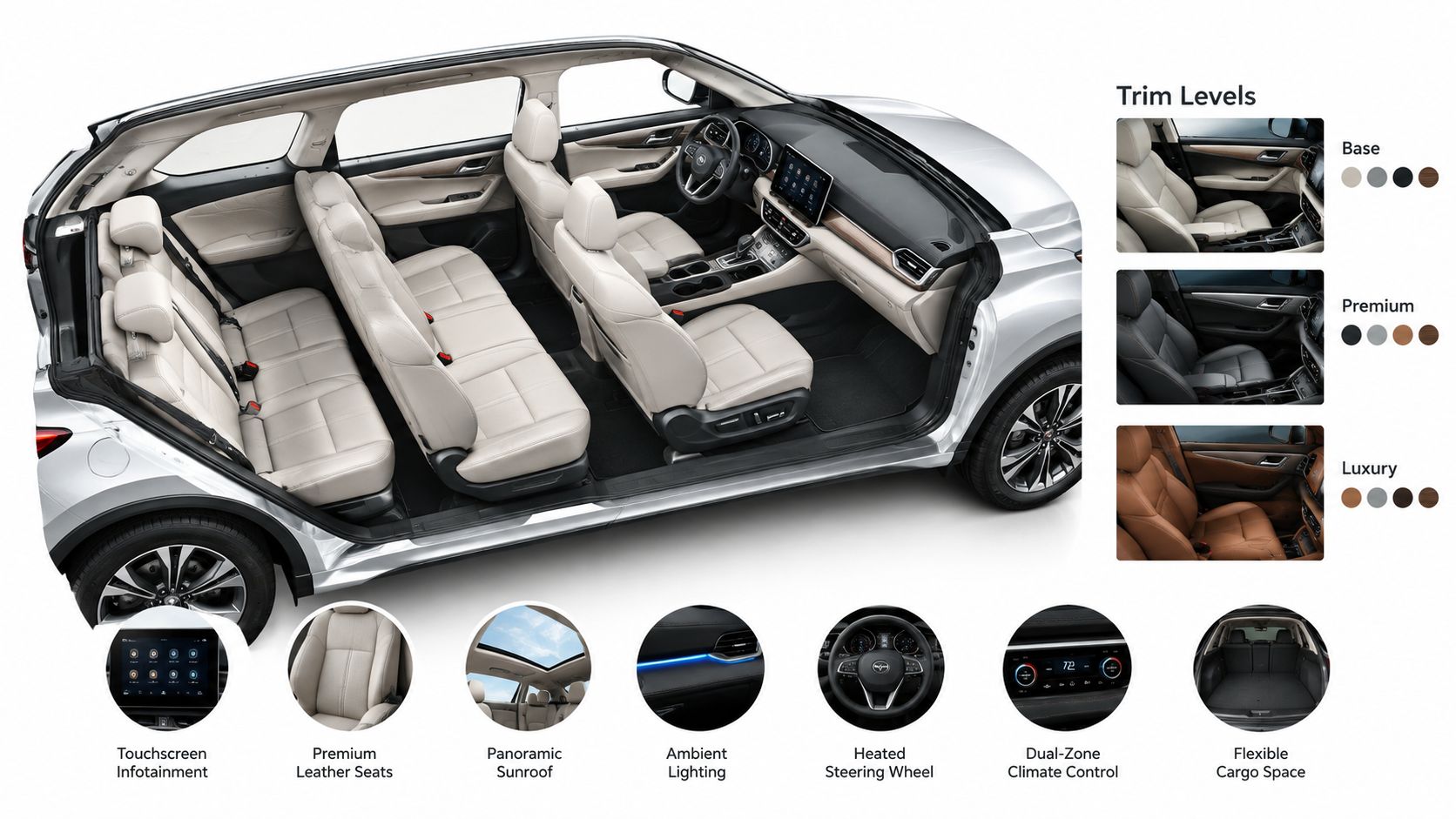
Where the Grand Cherokee earns its premium position
The 2026 Grand Cherokee trim range creates a wide value spread. The Laredo is the entry point, the Limited adds more comfort and technology, and the Summit moves into a luxury-focused configuration. The available 2.0-liter turbocharged engine becomes especially relevant in upper trims, while the 3.6-liter V6 remains associated with the lower trim structure, according to the 2026 Jeep model comparison.
For Long Island winters, prioritize equipment that affects daily use:
- Heated front seats and a heated steering wheel make cold commutes more comfortable.
- A power liftgate helps when your hands are full of groceries or children’s gear.
- Blind-spot monitoring and parking assistance reduce stress in crowded lots.
- Wireless smartphone connectivity keeps navigation and calls convenient.
- A surround-view camera, where available, helps justify the larger body.
The Grand Cherokee 4xe also gives the lineup an electrified alternative for buyers who want premium comfort without abandoning higher performance. The important question is whether your home or workplace routine makes charging practical.
My trim recommendation
I’d start most buyers with a well-equipped Grand Cherokee Limited rather than jumping immediately to the most expensive trim. The Limited is where the cabin begins to feel distinctly upscale, while the Summit makes sense for shoppers who specifically want top-level materials and technology.
For Cherokee shoppers, choose equipment that improves parking, winter comfort, and commute convenience before paying for appearance packages. A smaller SUV with the features you use every day is a better purchase than a larger SUV selected for features that remain unused.
Matching the SUV to Your Local Lifestyle
The towns around Amityville create different versions of the same buying decision. Babylon, Lindenhurst, Copiague, and Massapequa Park sit within the local shopping area for drivers considering a new vehicle near the Amityville retail corridor, as reflected in local area coverage.
A buyer in Massapequa Park may face tighter parking situations and more frequent short trips. The Cherokee’s smaller dimensions make it easier to position in confined spaces, and its lower output may be entirely adequate if the vehicle carries a small household without a trailer.
In Lindenhurst, the answer depends more on household routine. A commuter who mostly drives alone or with one passenger should lean Cherokee. A family that carries bulky equipment, shops in large batches, or regularly loads several passengers should take the Grand Cherokee seriously.
A town-by-town recommendation
- Massapequa Park: Choose the Cherokee if parking ease and compact maneuverability dominate your week. Choose the Grand Cherokee only if its extra room solves a regular cargo or passenger problem.
- Copiague: The Cherokee is the practical urban-suburban choice for buyers who want a smaller footprint. Move to the Grand Cherokee when you need stronger acceleration, more towing headroom, or a more premium cabin.
- Lindenhurst: Families with frequent gear-hauling duties will appreciate the Grand Cherokee. Solo commuters and smaller households should keep the Cherokee on the shortlist.
- Babylon: The Grand Cherokee fits buyers who use their SUV for family trips, outdoor equipment, and heavier weekend responsibilities. It’s unnecessary if your driving is mostly local errands and parking-heavy commuting.
The larger SUV should earn its space in your driveway. If it doesn’t solve a recurring problem, the smaller model is the smarter Long Island choice.
Your garage matters as much as your street. Measure the opening, account for mirror clearance, and test the rear hatch with the vehicle positioned where you normally park. Bring your children’s car seats and the bags or equipment you typically carry.
The best recommendation is personal, but it doesn’t need to be complicated. Pick the Cherokee for daily agility and adequate utility. Pick the Grand Cherokee for regular passenger comfort, expanded cargo flexibility, stronger performance, or towing.
Exploring Alternative New Vehicle Options
Some shoppers begin with the Grand Cherokee and Cherokee comparison before realizing neither model matches the job. That’s usually a sign that the buyer needs to define the vehicle’s primary role more clearly.
The Jeep Wrangler is the right alternative for drivers who prioritize open-air design and dedicated off-road capability. It makes sense for a buyer who actively seeks trail use and wants a vehicle built around that experience. It’s not the automatic answer for a family that just wants a comfortable commute.
The Dodge Durango deserves attention from households that need a larger family format and extra seating flexibility. It’s a better direction when passenger capacity matters more than the compact footprint of the Cherokee or the two-row focus of the standard Grand Cherokee.
When a truck is the honest answer
Some SUV shoppers are really trying to carry messy, oversized, or outdoor equipment. If you’re repeatedly asking whether an enclosed cargo area can handle tools, building materials, landscaping supplies, or recreational gear, consider a pickup instead.
The 2026 Ram 1500 lineup includes the Big Horn and Lone Star trims, with the latter serving as a regional trim designation while Big Horn is the broader national nameplate, according to Edmunds’ 2026 Ram 1500 trim information. Edmunds lists an available 3.6-liter V6 with 305 horsepower and 271 lb-ft of torque for the 2026 Ram 1500 trim set.
Match the model to the actual job
- Wrangler: Select it for genuine off-road interest and open-air freedom.
- Durango: Select it when your household needs more seating flexibility and family-oriented space.
- Ram 1500 Big Horn: Consider it for a broadly available truck configuration with everyday usability.
- Ram 1500 Lone Star: Consider it if that regional trim identity and its equipment fit your preferences.
- Grand Cherokee: Choose it for premium two-row SUV comfort, stronger towing, and broader cargo usefulness.
- Cherokee: Choose it for a smaller, more maneuverable new SUV suited to routine commuting.
Don’t let a higher capability number decide the purchase by itself. A truck bed, off-road hardware, or extra seating only creates value when your household uses it.
Next Steps for Long Island Jeep Buyers
Turn the comparison into a controlled test drive. Drive the Cherokee and Grand Cherokee back to back on the same day, using the same route and parking conditions. The difference in width, seating position, acceleration, and turning confidence becomes much easier to judge when you switch directly from one vehicle to the other.
Bring your real questions
Before visiting a showroom, write down the situations that cause frustration in your current vehicle:
- Load the family gear: Bring a car seat, stroller, sports bag, or anything else you carry regularly.
- Test parking: Use a tight space and evaluate visibility, camera coverage, door clearance, and liftgate access.
- Drive your commute route: Pay attention to merging, ride comfort, braking, and cabin noise.
- Check the exact vehicle: Confirm engine, drivetrain, towing equipment, seating configuration, and installed packages.
- Review the payment: Ask the finance team to compare current incentives, loan terms, and lease options for the specific new vehicle.
Ask whether the Grand Cherokee’s additional capability is included in the configuration you’re considering or requires an available package. If you’re comparing a Cherokee with a Grand Cherokee, ask the salesperson to show you the cargo area with the second row in normal use, not only with seats folded.
For local new vehicle shopping, Security Dodge Chrysler Jeep RAM of Amityville offers new Jeep, Dodge, Chrysler, and Ram vehicles, including the models discussed here. You can review current options through the new vehicle inventory before arranging your visit.
My recommendation is direct. Buy the Cherokee when its smaller footprint fits your commute and your family’s actual needs. Buy the Grand Cherokee when you’ll regularly use its stronger powertrain, larger cabin, premium interior, or towing capacity. If neither fits, test the Wrangler, Durango, or Ram 1500 instead of forcing the wrong SUV into your driveway.
Security Dodge Chrysler Jeep RAM offers new Jeep Grand Cherokee and Cherokee options, along with the Wrangler, Durango, and Ram 1500 Big Horn and Lone Star. Visit Security Dodge Chrysler Jeep RAM in Amityville to compare vehicles back to back, review current purchase or lease options, and find the new model that fits your Long Island routine.
0 comment(s) so far on Grand Cherokee vs Cherokee: Long Island Guide