





Grand Cherokee vs Durango: Which SUV Is Best for You?
You’re comparing two SUVs after another week of Long Island driving. One vehicle needs to handle a commute on the Southern State Parkway, school drop-offs in Massapequa, groceries in Amityville, and a weekend trip to Jones Beach. The other needs enough room for relatives, beach gear, and perhaps a boat or trailer headed toward the Great South Bay.
That’s why the Grand Cherokee vs Durango decision deserves more than a quick look at horsepower or a feature list. The Jeep Grand Cherokee is the more balanced, refined choice for many daily drivers, while the Dodge Durango makes a stronger case when passenger space, cargo capacity, towing, and straight-line performance come first. Here’s how I’d guide a Long Island family through the decision.
Table of Contents
- Choosing Your Next Family SUV on Long Island
- Grand Cherokee vs Durango At a Glance
- Engine Power Towing and Fuel Economy
- Interior Space Comfort and Cargo Room
- Technology Safety and Long-Term Reliability
- Making the Final Choice Ownership Costs and Verdict
- Schedule Your Test Drive in Amityville
Choosing Your Next Family SUV on Long Island
A family in Amityville may start the search thinking it needs “an SUV,” but that label covers two very different ownership experiences. The Grand Cherokee and Durango can both manage commuting, errands, road trips, and difficult weather, yet their layouts serve different households.
Consider a typical weekday. The driver leaves Amityville, merges onto the Southern State Parkway, drops children at school, parks near a crowded shopping center, and returns home with sports equipment in the cargo area. The Grand Cherokee’s two-row layout usually fits that routine well. It carries up to five passengers and keeps the footprint easier to manage when parking and maneuvering through local streets.
The Durango answers a different problem. It gives a larger family a third row, additional passenger flexibility, and more room for bulky items. A family traveling from Massapequa, Lindenhurst, or Babylon may value the ability to carry more people without immediately giving up every seat behind the second row.
Practical rule: Choose based on the seats and cargo space you’ll use every week, not the capability you might use once a year.
Weekend plans also matter. The Grand Cherokee appeals to buyers who want a comfortable SUV with Jeep’s all-weather and off-road identity. The Durango feels more like a muscular family hauler, especially for drivers who want available V8 performance or regularly tow.
Long Island shoppers should also consider the drive between daily efficiency and occasional capability. A powerful three-row SUV can make sense for a large household, but a two-row vehicle may be the smarter purchase for a couple or smaller family that spends most of its time commuting.
Both vehicles deserve a serious test drive, but my starting recommendation is simple. Buy the Grand Cherokee for a refined two-row daily SUV. Buy the Durango when the third row, cargo volume, or performance is a firm requirement.
Grand Cherokee vs Durango At a Glance
A family leaving the LIE for a weekend in Montauk will notice the difference quickly. The Grand Cherokee is easier to place in a driveway and better suited to a smaller household that mainly needs comfortable two-row transportation. The Durango earns its size with a third row, additional cargo flexibility, and a more aggressive performance range.
| Specification | Jeep Grand Cherokee | Dodge Durango |
|---|---|---|
| Seating | Up to 5 passengers in typical two-row models | Up to 7 passengers |
| Base engine availability | 3.6-liter Pentastar V6 in some trims | 3.6-liter Pentastar V6 in some trims |
| V6 output | About 293 to 295 hp and 260 lb-ft | About 293 to 295 hp and 260 lb-ft |
| Maximum cargo volume | Roughly 70.8 cubic feet in Grand Cherokee L models | About 85.1 cubic feet |
| Top performance option | 4xe plug-in hybrid, 375 hp and 470 lb-ft | Supercharged 6.2-liter HEMI V8, 710 hp |
The Grand Cherokee is the versatile choice for a smaller household that values comfort, manageable size, and Jeep capability.
For daily Long Island driving, the Grand Cherokee is my default recommendation for couples and smaller families. Its two-row layout keeps school runs, commuting, and local parking straightforward, while its Jeep identity suits changing weather and weekend travel.
Choose the Durango if your family regularly carries more than five people, needs substantial room for sports equipment, or wants serious V8 performance. Its third row can prevent the weekly compromise of leaving someone or something behind, and its larger cargo area helps on extended trips.
The Durango is the better family hauler, but the Grand Cherokee is the better default choice for many two-row households.
Neither SUV wins every category. The Durango leads in seating and maximum cargo volume. The Grand Cherokee provides an efficiency-oriented 4xe option and a more manageable size for families that will not use three rows every week.
Engine Power Towing and Fuel Economy
For a Long Island school run, commute, or weekend trip, the standard V6 gives either SUV enough usable performance. Both models offer the 3.6-liter Pentastar V6 in some trims, with about 293 to 295 horsepower and 260 lb-ft of torque. That makes the two SUVs easy to live with in ordinary traffic, including merging onto the parkway and carrying a full passenger load.
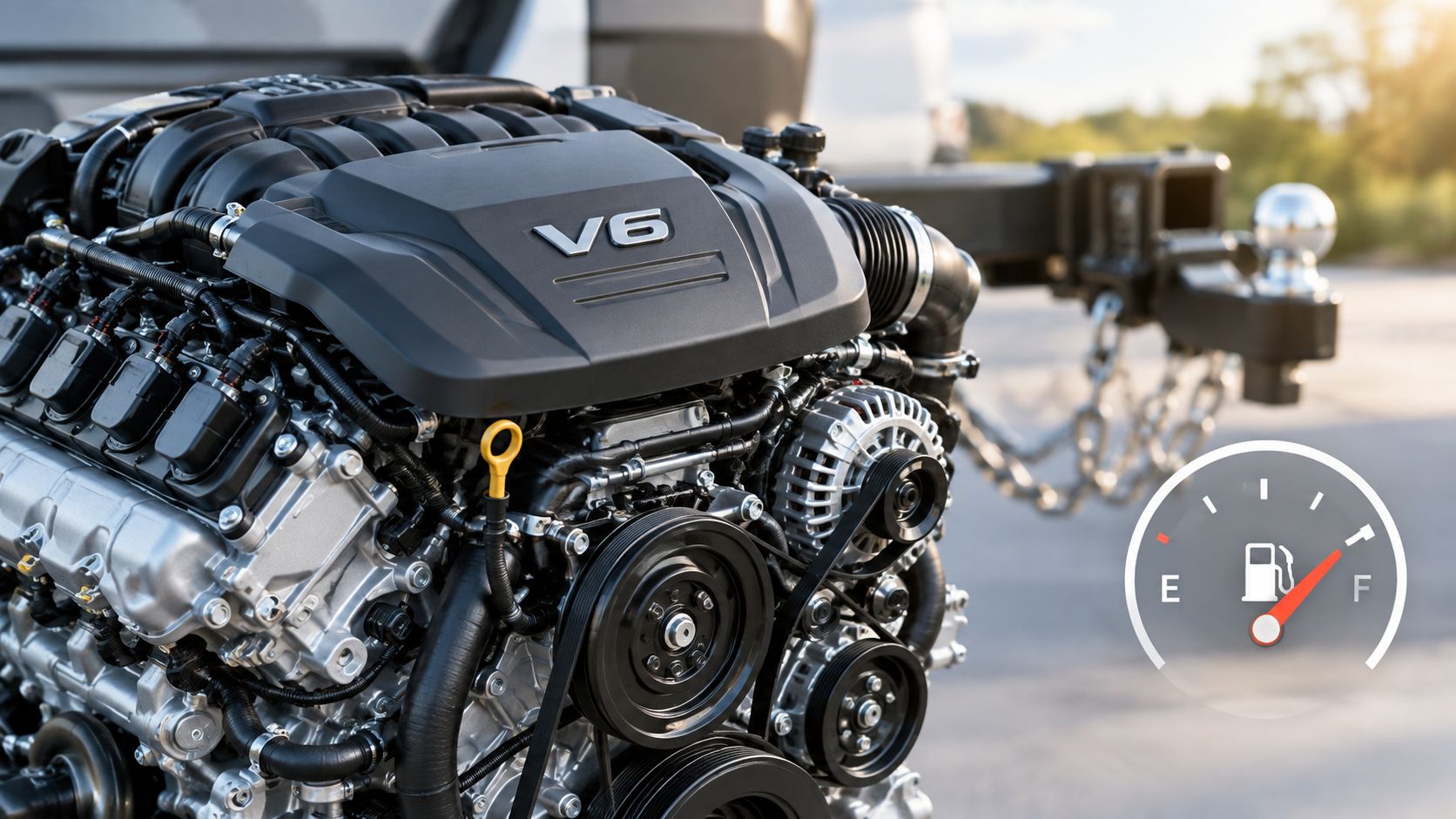
The Durango separates itself with available muscle. Its supercharged 6.2-liter HEMI V8 producing 710 horsepower gives the SUV forceful acceleration and the character of a high-output performance vehicle. That setup fits an owner who values rapid passing, strong towing confidence, and V8 power, not just a vehicle for routine errands.
The Grand Cherokee offers a different kind of advantage through the 4xe plug-in hybrid. Its 2.0-liter turbocharged engine and electric assistance deliver 375 horsepower and 470 lb-ft of torque. That combination supplies strong low-end response while giving daily drivers an efficiency-oriented alternative to a conventional gasoline engine.
Match the powertrain to your routine
Select the Durango V6 if you need three rows but have no interest in a performance-focused engine. Choose its available V8 if towing, quick acceleration, or the distinctive feel of a powerful SUV will be part of your regular driving.
The Grand Cherokee 4xe suits a commuter who wants electrified powertrain technology and strong torque. It adds a clear reason to choose the Grand Cherokee beyond its standard V6, particularly for an owner balancing weekday driving with weekend travel.
Fuel use becomes a practical ownership issue. Review data places the Durango V6 at 15 to 20 mpg combined, while the Grand Cherokee line generally sits around 21 to 23 mpg combined, as reported in the Car and Driver Durango review. The same review recorded 23 mpg for the Durango V8 R/T during highway testing.
For a family that tows only occasionally, the Durango’s added weight and performance can mean higher fuel costs without much daily benefit. Frequent towing or a strong preference for V8 power makes that trade-off easier to accept. A regular commuter will feel the Grand Cherokee’s efficiency advantage more often than its maximum performance limits.
Choose the Grand Cherokee when commuting efficiency and powertrain variety matter most. Choose the Durango when towing strength, available V8 power, or three-row utility matters more than fuel economy.
Interior Space Comfort and Cargo Room
For Long Island families, the key difference between the Grand Cherokee and Durango appears after the front row. The Durango is a three-row SUV with seating for up to seven passengers, while the Grand Cherokee is typically a two-row SUV with seating for up to five. The published comparison lists about 85.1 cubic feet of maximum cargo volume for the Durango and roughly 70.8 cubic feet for Grand Cherokee L models. That gives the Durango a clear advantage for larger families and bulky weekend loads.
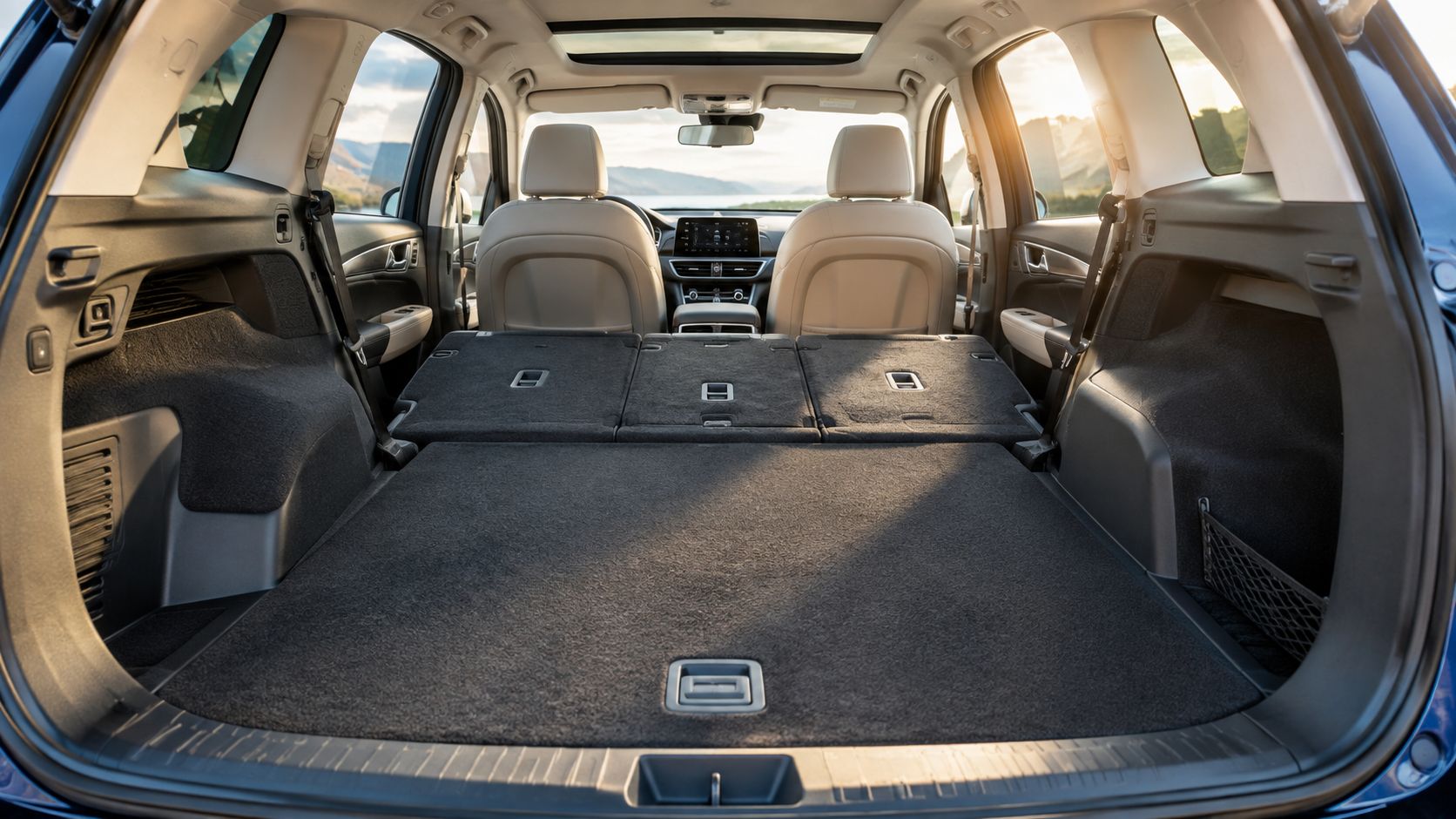
A Grand Cherokee suits a household that usually carries children, a partner, groceries, or sports equipment. Without a third row taking up the rear cabin, its layout stays simple for daily errands, school runs, and commuting. The available cargo area can handle strollers, shopping bags, and weekend luggage without requiring a larger vehicle than your routine demands.
The Durango earns its extra size through flexibility. Its third row lets you bring relatives, friends, or additional children along for beach days, family gatherings, and road trips. Everyone can ride together instead of arranging a second vehicle, but the third row also adds space and seating that a smaller household may rarely use.
Where the Grand Cherokee fits better
Choose the Grand Cherokee if your household normally carries five people or fewer. It offers useful room for groceries, strollers, sports equipment, and luggage while avoiding the extra cabin space required by a third row.
That format also works well around Amityville, Massapequa, and nearby Long Island towns, where tight parking lots, residential streets, and frequent short trips are part of daily driving. Fewer seats can mean a simpler loading routine and less unused interior space.
Where the Durango earns its size
The Durango’s third row is the deciding feature for families that regularly transport seven passengers. It provides genuine people-moving capacity, not merely a larger cargo compartment. Its approximately 85.1 cubic feet of maximum cargo volume also leaves more room for folded-seat loads such as sports gear, luggage, home-improvement supplies, and beach equipment.
If you need the third row every month, buy the Durango. If you rarely carry more than five people, the Grand Cherokee avoids paying for space you won’t use.
Measurements cannot replace a proper test drive. Sit in every row, check child-seat access, fold the seats, and load the items your family carries. Pay attention to second-row entry and cargo loading height. A vehicle that looks right on paper may still feel inconvenient during a normal Long Island week.
Technology Safety and Long-Term Reliability
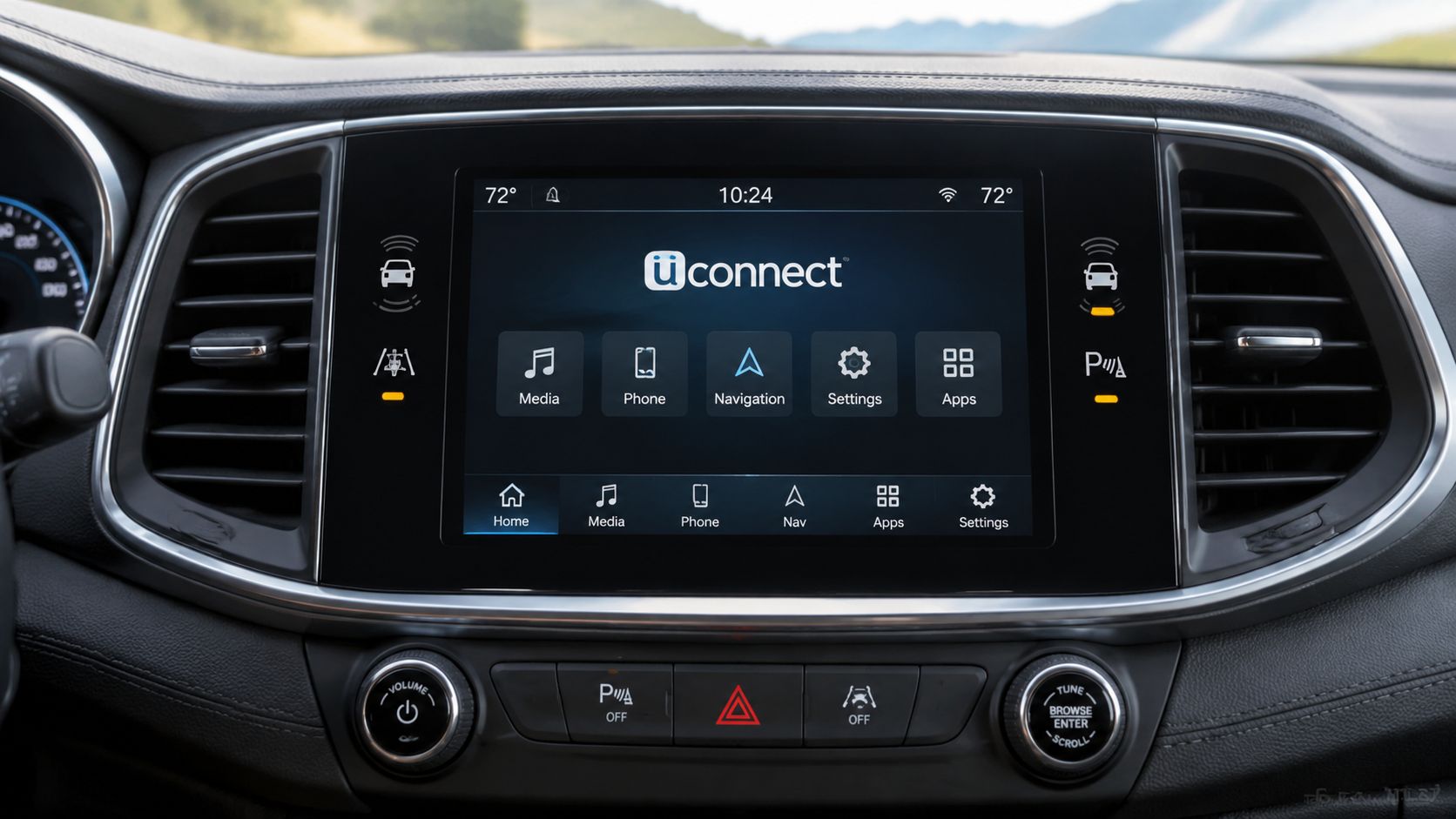
For a Long Island family, technology earns its place when it makes the commute easier. During your test drive, adjust the climate controls, connect a phone, switch audio sources, and read navigation directions while keeping your attention on traffic. If those tasks require too many menu taps, the system will frustrate you on daily trips through Amityville, Massapequa, and nearby towns.
The Uconnect interface shapes that experience in both SUV families. Check the screen’s position, menu organization, daylight visibility, and audio clarity for rear passengers. A feature matters only when everyone can use it comfortably during an ordinary commute or weekend drive.
Safety data deserves a close look
NHTSA-based data lists multiple recent five-star crash-test configurations for the Grand Cherokee, including 2023 four-wheel-drive and rear-wheel-drive variants with five stars for both frontal and side impact. The same compiled dataset lists 39,592 NHTSA complaints from 1989 through 2026, equal to a complaint rate of 102.5 per 10,000 vehicles sold in the United States, as reported in the Grand Cherokee safety and complaint data.
These figures cannot predict every owner’s experience. They do give you a reason to check the safety history, recall status, warranty coverage, and exact configuration before signing paperwork.
The comparison dataset rates the Durango at 71 out of 100 for reliability, compared with 66 out of 100 for the Grand Cherokee. It lists 27 recalls for the Durango versus 97 for the Grand Cherokee. Estimated annual repair costs are close, at about $675 for the Durango and $666 for the Grand Cherokee, so the higher Durango reliability rating does not create a major gap in those estimated costs.
Safety ratings and reliability scores are useful filters, but the exact vehicle, powertrain, equipment, warranty, and maintenance history still matter.
For a new-vehicle purchase, compare the window sticker, included driver-assistance features, warranty terms, and recall status for the specific SUV in front of you. The Durango has the stronger reliability figures in this dataset. The Grand Cherokee offers documented five-star configurations and a more efficiency-focused powertrain option.
Making the Final Choice Ownership Costs and Verdict
For Long Island families, the best choice depends on how the SUV will serve your household every week. The Durango gives you three rows, more cargo room, and available high-output performance, but its larger size and lower efficiency matter during daily trips. The Grand Cherokee gives up the third row and delivers an easier two-row format with more powertrain choices.
Fuel use belongs in the ownership decision. The Durango V6 is rated at 15 to 20 mpg combined, while the Grand Cherokee line generally sits around 21 to 23 mpg combined. A driver commuting from Amityville or Massapequa may feel that difference over repeated weekday trips. A household using its SUV mainly for beach runs, errands, and weekend hauling may place greater value on seating and cargo capacity.
My recommendations by buyer
- Growing family: Choose the Durango if you regularly carry more than five people. Its third row and approximately 85.1 cubic feet of maximum cargo space provide useful room for children, passengers, strollers, sports equipment, and luggage.
- Smaller family or couple: Choose the Grand Cherokee. Its usual two-row layout and seating for up to five passengers suit commuting, errands, and weekend travel without paying for capacity you rarely use.
- Performance-focused buyer: Choose the Durango if the available 710-horsepower supercharged 6.2-liter HEMI V8 defines the driving experience you want. Choose the Grand Cherokee 4xe if 375 horsepower and 470 lb-ft of torque fit your preference for an electrified powertrain. As noted earlier, the two SUVs take different approaches to performance.
- Off-road enthusiast: Consider the Wrangler instead. It is the more focused choice when trail capability matters more than a quiet, family-oriented cabin.
- Truck buyer: Consider the Ram 1500 Big Horn or Lone Star if work or recreation requires open-bed utility. These are trims in the light-duty Ram 1500 lineup.
Long-term value needs a closer look
Recent sales results should temper automatic assumptions about resale value. Grand Cherokee U.S. sales declined from 244,597 in 2023 to 208,318 in 2025, while Durango sales rose from 59,358 in 2024 to 80,521 in 2025, according to the reported FCA U.S. sales results.
The Grand Cherokee still sells in much higher volume, while the Durango’s recent sales direction deserves attention. Before buying, compare local inventory, trim mix, incentives, expected mileage, and the exact configuration. Those details can influence your eventual trade-in more than the badge alone.
The Grand Cherokee is the smarter all-around choice for most Long Island households with five or fewer regular passengers. The Durango is the better purchase when three-row space or muscular performance is required. Security Dodge Chrysler Jeep RAM in Amityville can help you compare the actual equipment, payment, and trade-in figures for each SUV.
Schedule Your Test Drive in Amityville
Online comparisons can narrow the decision, but they can’t tell you whether the driver’s seat feels right or whether your children can reach the second row comfortably. Test both vehicles on the same day, using the same route and the same family questions.
Start with the practical checks:
- Test local maneuverability: Drive through parking lots, residential streets, and a faster road. Notice visibility, turning confidence, ride comfort, and how easily you can judge the vehicle’s corners.
- Use the cabin: Sit in every row of the Durango, then compare the Grand Cherokee’s rear-seat comfort. Fold the seats, open the cargo area, and test whether your stroller, sports bags, beach supplies, or luggage fit without awkward stacking.
- Operate the technology: Connect your phone, adjust the climate controls, change audio sources, and try the navigation interface. If you’ll share driving duties, have another household member repeat the process.
- Evaluate the powertrain: Try the V6 in normal traffic and assess acceleration during a safe merge. If you’re considering a Durango V8 or Grand Cherokee 4xe, drive that exact configuration rather than assuming every trim feels the same.
- Discuss ownership details: Ask for the exact equipment, warranty information, available incentives, financing options, and trade-in process for the new vehicle you’re considering.
Security Dodge Chrysler Jeep RAM in Amityville is one local option for comparing new Jeep, Dodge, and Ram vehicles. Drivers from nearby Long Island communities can use an in-person visit to compare the Grand Cherokee, Durango, Wrangler, and Ram 1500 options against their actual family routines.
Bring the people who’ll ride in the SUV most often. A second-row passenger may notice comfort issues you miss from the driver’s seat, and a partner may have a different view of cargo access or screen usability. The best choice should work for the household, not just the person holding the keys.
Visit Security Dodge Chrysler Jeep RAM to compare new Grand Cherokee and Durango options in person, along with the Wrangler and Ram 1500 Big Horn or Lone Star. Bring your passenger and cargo checklist, take the vehicles on a proper test drive, and let the SUV that fits your Long Island routine earn your business.
0 comment(s) so far on Grand Cherokee vs Durango: Which SUV Is Best for You?