




Jeep Wrangler Gas Mileage Explained by Trim and Engine
Most advice about Jeep Wrangler gas mileage starts with a single MPG figure and stops there. That’s the wrong way to shop. A Wrangler’s fuel economy changes with the engine, body style, transmission, tires, axle ratio, and trim, so the number on one window sticker may tell you very little about another Wrangler sitting beside it.
For Long Island buyers, the useful question isn’t whether a Wrangler is “bad on gas.” The useful question is which new Wrangler configuration fits your commute near Amityville, your drives through North Amityville, North Babylon, North Lindenhurst, Copiague, and Amityville, and the weekends when you want genuine four-wheel-drive capability. The lineup has an efficiency range, and your choice determines where you land inside it.
Table of Contents
- Why Jeep Wrangler Gas Mileage Is Not One Number
- Wrangler MPG by Engine and Body Style
- How Wrangler Fuel Economy Compares to Grand Cherokee, RAM 1500, and Durango
- Real-World Range and Fuel Costs on Long Island
- Choosing the Right Wrangler Configuration for Your Driving Habits
- Practical Fuel-Saving Tips That Respect the Wrangler’s Design
- Finding Your Next Wrangler Near Amityville
Why Jeep Wrangler Gas Mileage Is Not One Number
The Wrangler’s shape explains much of the confusion. It’s designed around upright visibility, removable body panels, available four-wheel drive, trail capability, and practical clearance rather than the smooth aerodynamic profile of a sedan. That design gives the Wrangler its identity, but it also means highway efficiency can remain limited even when Jeep uses a smaller turbocharged engine.
The historical comparison makes the progress clear. A 2001 Jeep Wrangler with a 2.5-liter inline-four, five-speed manual transmission, and four-wheel drive was rated at 17 mpg city, 19 mpg highway, and 17 mpg combined, according to Vehicle History’s Wrangler fuel-economy overview. A 2021-era Wrangler with a 2.0-liter turbocharged inline-four and eight-speed automatic transmission reached 22 mpg city, 24 mpg highway, and 23 mpg combined in the cited configuration, an improvement of 5 mpg in the city and 5 mpg on the highway compared with that older benchmark, as detailed by the same source.
That progress came from more than one change. Engine downsizing, turbocharging, and transmission development helped the Wrangler use fuel more effectively while retaining four-wheel-drive capability. Still, modern shoppers shouldn’t treat that improvement as proof that every Wrangler delivers the same result.
The headline number can mislead
The EPA lists the 2024 Jeep Wrangler at 21 mpg combined, with one configuration rated at 20 mpg city and 23 mpg highway, according to the EPA’s 2024 Jeep Wrangler model page. That figure is useful, but it’s only useful when you know which engine, doors, and drivetrain produced it.
Recent coverage places the 2026 Wrangler range at roughly 13 to 20 mpg city and 16 to 23 mpg highway, with the most efficient gasoline model being the two-door four-cylinder configuration, according to the cited EPA-based information in the same EPA Wrangler reference. At the other end, the V8-powered Wrangler 392 is rated at 13 mpg city and 16 mpg highway, creating a 7 mpg city difference and 7 mpg highway difference versus the most efficient gasoline model.
The practical rule: Don’t ask for “the Wrangler MPG.” Ask for the MPG of the exact Wrangler you’re considering.
A two-door four-cylinder Wrangler and a four-door V8 Wrangler may share the same name and visual DNA, but they serve different buyers. One prioritizes the most efficient gasoline operation available in the lineup. The other prioritizes dramatic performance. Neither is automatically the right choice for every Long Island driver.
Wrangler MPG by Engine and Body Style
Engine selection creates the clearest split in Wrangler fuel economy, but body style and equipment still matter. The two-door four-cylinder sits at the top of the gasoline range, while the 392 V8 occupies the performance-first end. The V6 offers a middle path for buyers who want familiar power and capability without moving to the V8.
Jeep Wrangler Gas Mileage by Engine
| Engine | City MPG | Highway MPG | Combined MPG |
|---|---|---|---|
| 2.0-liter turbocharged four-cylinder | 20 | 23 | Not specified in the cited data |
| 3.6-liter V6 | 18 | 23 | Not specified in the cited data |
| 6.4-liter V8 in Wrangler 392 | 13 | 16 | Not specified in the cited data |
The 2.0-liter turbocharged four-cylinder is generally the most efficient gasoline engine, at about 20 mpg city and 23 mpg highway, while the 3.6-liter V6 is generally lower in comparable configurations at roughly 18 mpg city and 23 mpg highway, according to Car and Driver’s Jeep Wrangler coverage. The city difference makes sense. A smaller turbocharged engine can reduce fuel use during lower-speed driving, while the Wrangler’s upright shape keeps highway efficiency closer between engines.
The highway figures also show why buyers shouldn’t expect downsizing to transform the Wrangler into a conventional commuter crossover. At cruising speeds, the vehicle’s shape, gearing, tires, and overall configuration still matter heavily. A four-cylinder can improve city mileage, but highway results may remain close to those of the V6.
Why doors and transmission matter
The two-door model is the efficiency leader in the gasoline lineup because it uses a lighter, more compact configuration than a four-door Wrangler. The four-door adds useful passenger and cargo space, but that added practicality can come with a fuel-economy trade-off depending on engine and equipment.
Transmission choice matters, too. The historical comparison between the older five-speed manual Wrangler and the newer eight-speed automatic configuration shows how gearing can support both city response and highway cruising. You shouldn’t assume that a manual or automatic will always deliver the same result across every trim. Read the window sticker for the exact vehicle, then compare the city and highway ratings rather than relying on a trim’s reputation.
The Wrangler 392 is a different proposition. Its 13 mpg city and 16 mpg highway rating makes it the least efficient gasoline configuration cited, but buyers choose it for V8 performance, not pump efficiency. If your daily route includes frequent stops around Amityville and your priority is keeping fuel use as low as possible, the 392 is the wrong Wrangler. If performance is the reason you’re shopping, its lower MPG is part of the ownership decision.
Where the 4xe fits
The Wrangler 4xe requires a more careful reading than a gas-only model. Current coverage lists 49 MPGe combined and about 20 mpg when the battery is depleted, as explained by Gas Mileage Guide’s Wrangler MPG coverage. Those figures describe two different operating conditions, not one everyday result that applies to every owner.
The 4xe can make strong sense for short trips and regular commutes when you plug in consistently. If you rarely charge, the battery-electric advantage shrinks and gasoline operation becomes the more relevant comparison. Judge the 4xe by your charging routine, not by its MPGe label alone.
How Wrangler Fuel Economy Compares to Grand Cherokee, RAM 1500, and Durango
The Wrangler isn’t designed to win a pure fuel-economy contest. Its upright body, four-wheel-drive hardware, removable features, and off-road focus create a different ownership proposition from the Grand Cherokee, RAM 1500 Big Horn and Lone Star, or Dodge Durango.
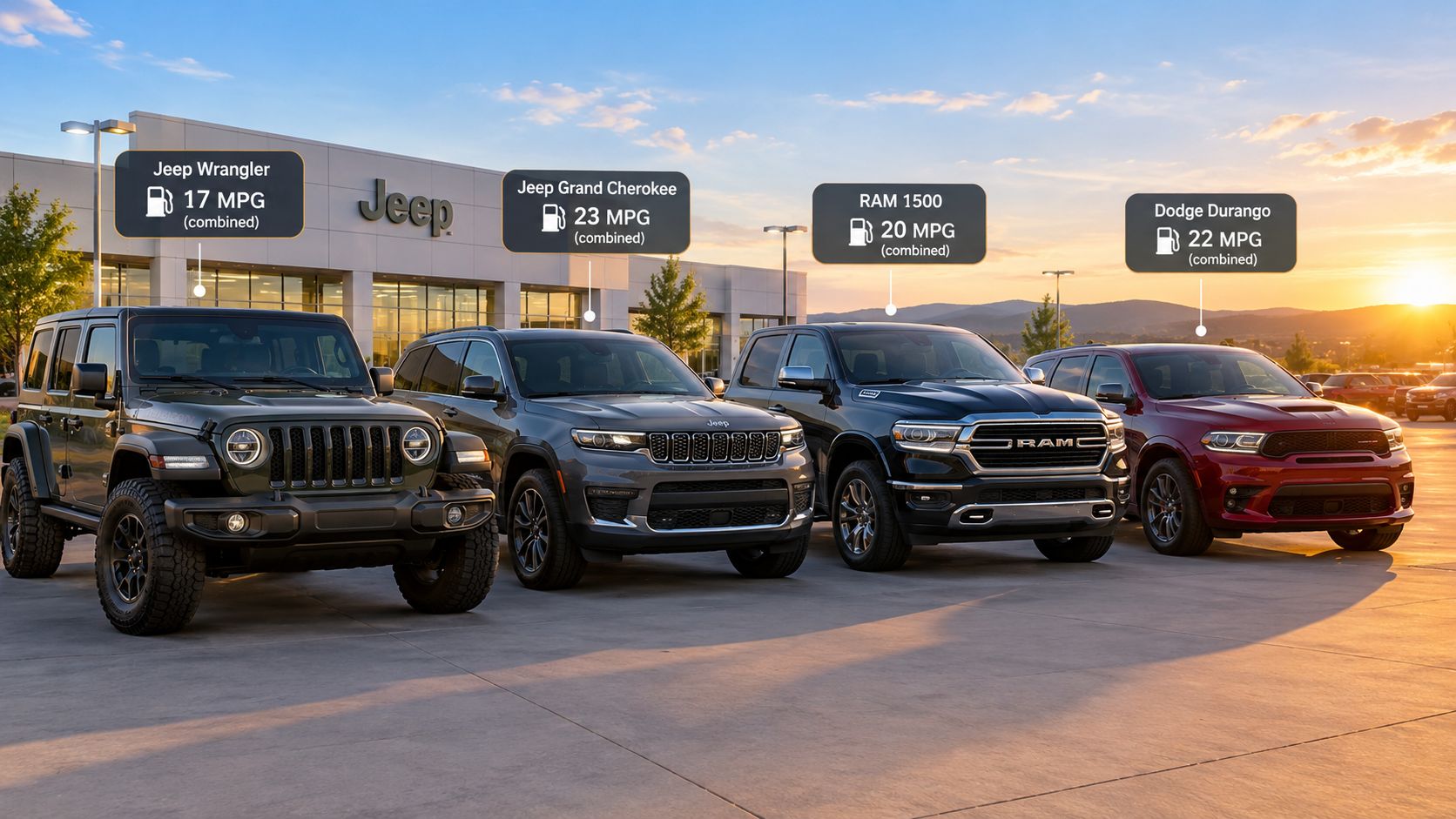
The Grand Cherokee is the closest alternative for many SUV shoppers who like Jeep capability but spend most of their time on pavement. Car and Driver reports that the 2026 Grand Cherokee has EPA city ratings from 19 to 23 mpg and highway ratings from 26 to 27 mpg, with the cited combined figures varying by configuration, according to Car and Driver’s Grand Cherokee coverage. Its smoother profile and road-oriented setup can make it a more comfortable fit for buyers focused on commuting, family trips, and highway travel.
Match the vehicle to the buyer
The RAM 1500 Big Horn and Lone Star deserve consideration when the buyer needs a pickup bed, towing-oriented utility, or truck-specific flexibility. Their fuel economy depends on engine, cab, drivetrain, and equipment, so there isn’t a verified MPG figure in the supplied data that supports a direct numerical comparison here. The right comparison starts with what you need to carry, not with a generalized truck rating.
The Durango suits buyers who want a Dodge SUV with three-row practicality and a more conventional road-going personality. Its fuel economy also varies by powertrain and configuration, so shoppers should compare the exact window sticker rather than assume it matches either the Wrangler or Grand Cherokee.
A better buying question: Do you need Wrangler-specific trail capability, Grand Cherokee road comfort, RAM utility, or Durango passenger space?
For a Long Island commuter, the Grand Cherokee may be the more natural fit when paved driving dominates. For a buyer who wants open-air driving, available four-wheel drive, and a distinctive off-road platform, the Wrangler earns its place even with a fuel-economy compromise. The RAM 1500 Big Horn or Lone Star makes more sense when a truck bed is central to the job, while the Durango fits buyers who prioritize SUV practicality and Dodge character.
Real-World Range and Fuel Costs on Long Island
Fuel planning starts with the combined MPG rating for the exact Wrangler, then adjusts for how you drive. Don’t calculate ownership around the best highway number if most of your week involves short trips, traffic, school runs, and local roads around Amityville, North Babylon, or Copiague.
Use this simple method:
- Find the exact combined MPG. Check the window sticker for the engine, doors, transmission, and drivetrain on the new Wrangler you’re considering.
- Estimate your driving distance. Add your regular commute, errands, and weekend travel across Long Island.
- Divide miles driven by combined MPG. That gives you an estimate of gallons consumed.
- Multiply gallons by the fuel price you pay. Fuel prices change, so use your current local price rather than relying on a fixed assumption.
The calculation is straightforward because it separates vehicle efficiency from driving volume. A driver who travels farther each week will use more fuel even with the same Wrangler configuration, while a driver with a short commute may see the 4xe’s charging advantage more clearly if regular plugging reduces gasoline use.
Why your route changes the result
Stop-and-go traffic generally works the engine harder than steady cruising. Short trips can also prevent the vehicle from settling into efficient operating conditions, while sustained highway travel exposes the Wrangler’s aerodynamic limitations. The Southern State Parkway and Sunrise Highway can produce a different result from local streets because speed, traffic flow, wind, roof equipment, and tire choice all affect consumption.
Don’t promise yourself the best-case rating. Use the combined figure as a planning baseline, then leave room for weather, traffic, passengers, cargo, and driving style. The EPA figures are comparison tools, not a guarantee of the exact number you’ll see on every tank.
Use the sticker for comparison, and your routine for budgeting. The same Wrangler can feel economical for one owner and expensive for another simply because their weekly driving patterns differ.
For residents of North Amityville, North Lindenhurst, and nearby communities, the most useful dealership conversation is configuration-specific. Ask to compare the exact four-cylinder, V6, 392, or 4xe vehicle you’re considering, then discuss how its rating fits your commute instead of asking for a generic Wrangler average.
Choosing the Right Wrangler Configuration for Your Driving Habits
The best Wrangler configuration isn’t automatically the one with the highest MPG. It’s the one that delivers the capability you’ll use without forcing you to pay for performance, size, or powertrain features that don’t fit your routine.
For the pavement-focused commuter
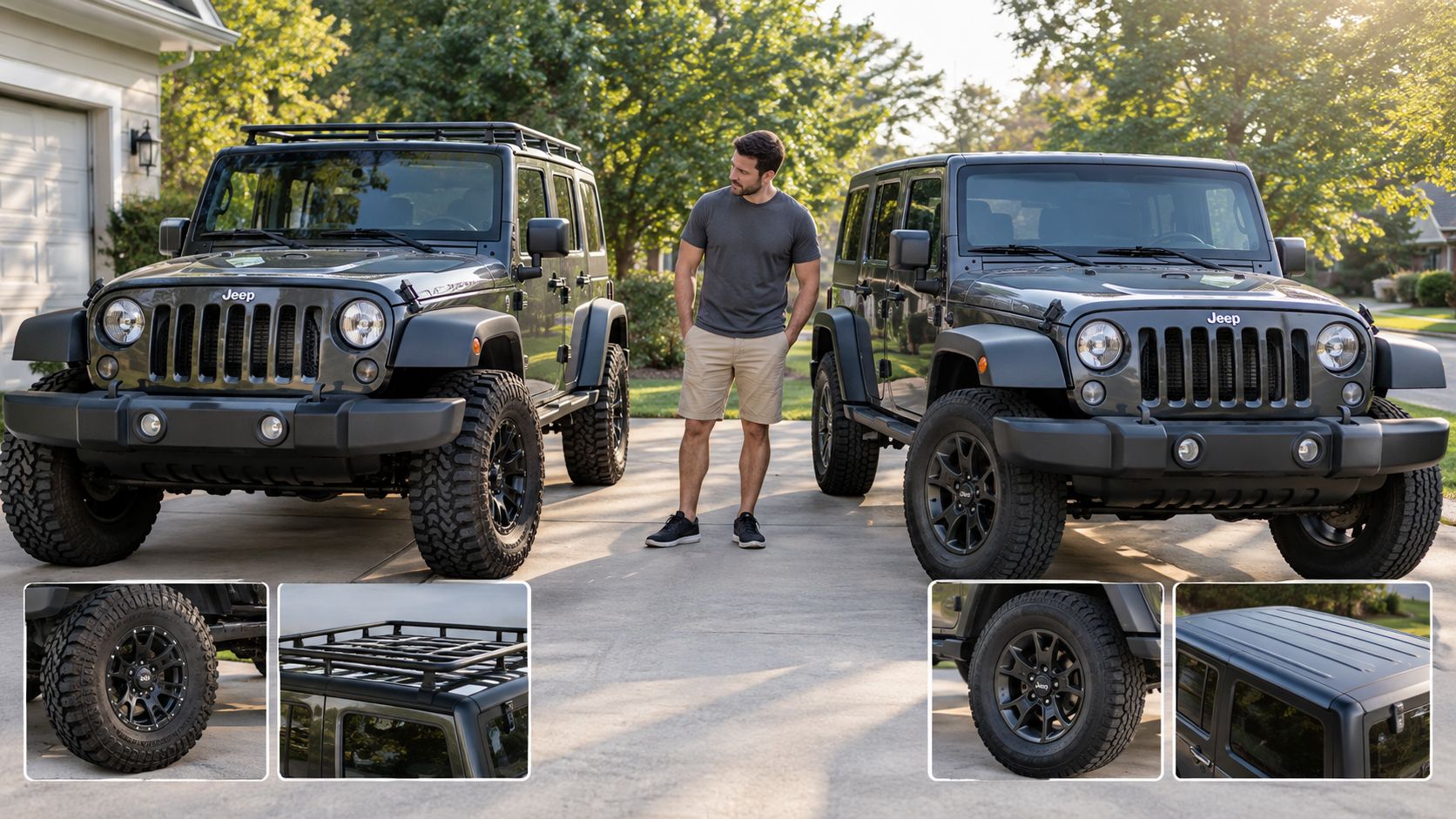
Choose the two-door Wrangler with the 2.0-liter turbocharged four-cylinder if your priority is the strongest gasoline fuel economy in the lineup and you don’t need the extra access and interior space of the four-door body. The cited rating of 20 mpg city and 23 mpg highway places it at the top of the gas-only range, according to Car and Driver’s Wrangler model coverage.
That recommendation is especially practical for drivers who spend most days on Long Island roads and want a Wrangler for lifestyle reasons rather than heavy trail use. If you need more rear-seat access or regularly carry passengers, accept the possibility of a lower result from the four-door configuration instead of pretending the added practicality comes free.
For the capability-first buyer
The V6 remains the balanced choice for shoppers who want Wrangler capability and a familiar power delivery without stepping into the 392’s performance-focused fuel economy. Its comparable rating is roughly 18 mpg city and 23 mpg highway, based on Car and Driver’s Wrangler information. Choose it when your priorities include passenger flexibility, trail use, and confident power rather than minimizing fuel consumption.
Axle ratio and tire choice deserve attention before you finalize a trim. Larger or more aggressive tires can change the way the vehicle uses fuel, and gearing can influence both response and cruising behavior. Ask for the exact equipment list on the Wrangler in front of you.
For the charging-ready owner
The 4xe is compelling only when your home or regular charging routine supports it. Its 49 MPGe combined rating and approximately 20 mpg gasoline-only operation after battery depletion describe two distinct use cases, as reported by Gas Mileage Guide. Choose it for frequent short trips and dependable charging, not because the label alone guarantees lower fuel use.
The 392 is for a buyer who knowingly prioritizes V8 performance. It isn’t a sensible efficiency pick, and it shouldn’t be presented as one. A clear product specialist will help you decide whether the performance is worth the fuel trade-off for your actual driving.
Practical Fuel-Saving Tips That Respect the Wrangler’s Design
You can improve Wrangler fuel economy, but you can’t drive away its basic design. The goal is better consistency, not sedan-like mileage.
- Use the correct tire pressure: Proper inflation supports efficient rolling and helps the Wrangler maintain predictable handling. Check the vehicle’s recommended pressure rather than using a guess based on the tire sidewall.
- Choose tires for your real use: Aggressive off-road tires can add rolling resistance on paved roads. If most of your driving takes place on the Southern State Parkway or Sunrise Highway, select equipment that matches that use.
- Limit unnecessary roof load: Roof racks and bulky cargo affect airflow. Remove equipment you aren’t using, especially during extended highway travel.
- Keep highway inputs smooth: Hard acceleration, abrupt braking, and repeated speed changes waste fuel. Steady driving gives the turbo four-cylinder, V6, or 4xe a better chance to operate efficiently.
- Treat open-air configuration as a trade-off: Removing doors or changing roof equipment can alter airflow and noise. Enjoy the Wrangler’s flexibility, but don’t expect every configuration to return the same result.
- Combine short errands: Several cold, brief trips can be less efficient than grouping errands into one route. This matters for local driving around Amityville and surrounding towns.
Maintenance also supports efficiency, even though it won’t erase the Wrangler’s boxy aerodynamics. Keep tires properly inflated, follow the new vehicle’s maintenance schedule, and address warning lights promptly. Those habits protect fuel economy and the capability you bought the Wrangler to deliver.
Finding Your Next Wrangler Near Amityville
Jeep Wrangler gas mileage makes sense only after you identify the exact engine, door count, transmission, tires, and trim. The two-door turbo four-cylinder is the clear gasoline efficiency choice, the V6 is the balanced capability option, the 4xe suits buyers who regularly charge, and the 392 is a performance decision rather than an economy decision.
That same configuration-first approach helps Long Island shoppers compare the Wrangler with the Grand Cherokee, RAM 1500 Big Horn and Lone Star, and Durango. Visit the new vehicle inventory at Security Dodge Chrysler Jeep RAM of Amityville, compare the window stickers, and ask product specialists how each configuration fits your daily driving near Amityville, North Amityville, North Babylon, North Lindenhurst, and Copiague.
Security Dodge Chrysler Jeep RAM offers new Wrangler, Grand Cherokee, RAM 1500, and Durango vehicles for Long Island shoppers comparing capability and fuel economy. Visit Security Dodge Chrysler Jeep RAM to review current new vehicle options and arrange an in-person comparison of the configurations that fit your driving.
0 comment(s) so far on Jeep Wrangler Gas Mileage Explained by Trim and Engine